Warp Knitting vs Weaving: Choosing a Mill Process
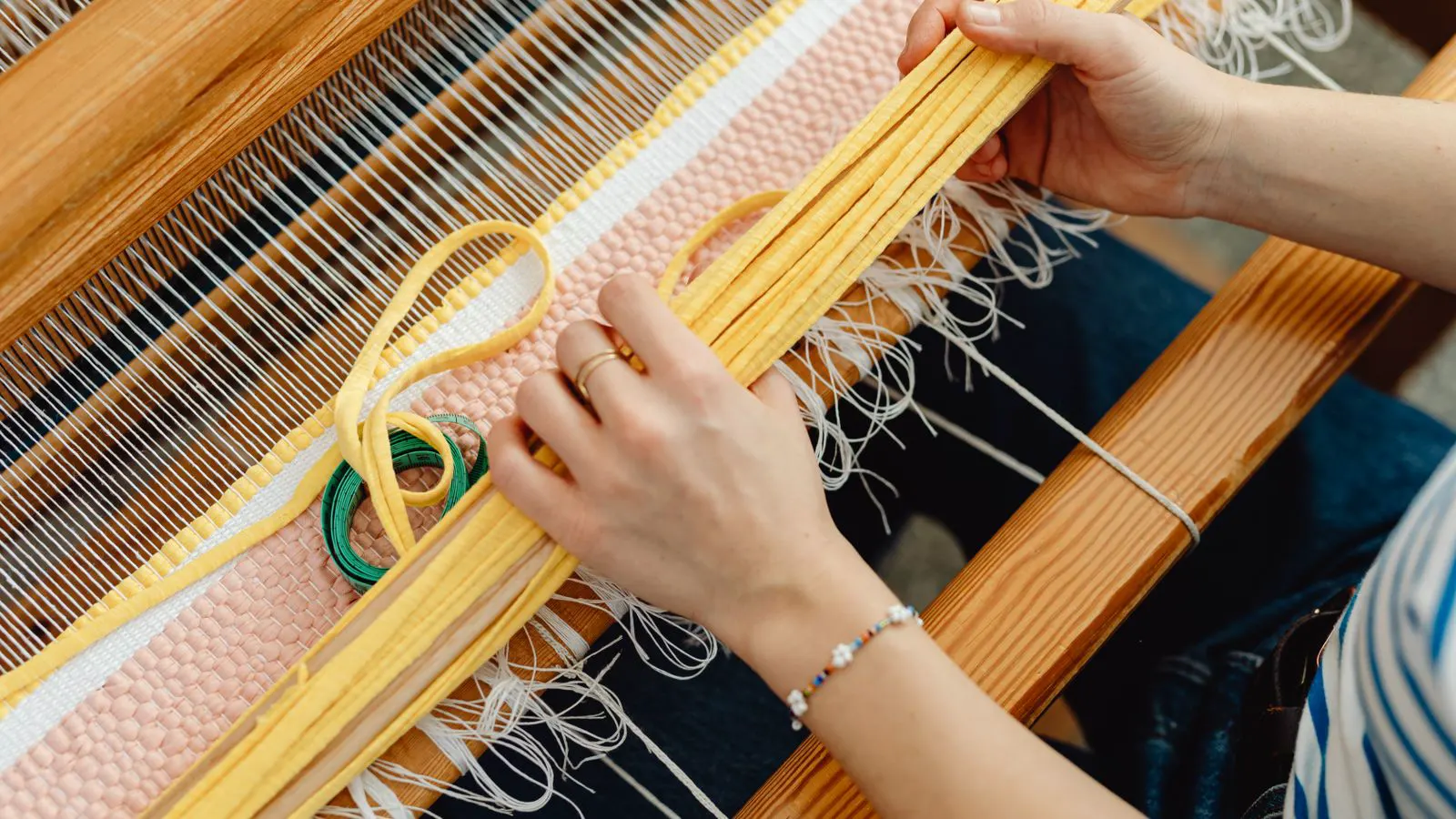
Knitting and weaving differ in how yarns form the fabric structure. Knitting creates loops for stretch and drape, while weaving interlaces warp and weft for stability. Choose based on target stretch, density, and production volume.
- Knitting produces loop-based structures that offer stretch and recovery.
- Weaving creates interlaced structures that provide dimensional stability.
- Mill process selection depends on target fabric performance and structural requirements.
- Some hybrid processes combine loop and interlaced structures for specific applications.
How Knitting and Weaving Build Different Fabric Structures
The core difference between knitting and weaving lies in how yarns connect to form a textile. Knitting creates interlocking loops, similar to a chain, while weaving interlaces warp and weft yarns at right angles. This structural difference drives the performance profile of the finished fabric.
Knit fabrics form when a pair of needles catches yarn and pulls it through existing loops. The resulting structure contains a row of loops on both sides of the fabric. Weave fabrics form when horizontal weft yarns pass over and under vertical warp yarns in a predetermined sequence. The interlacing creates a stable, grid-like structure.
This distinction determines how the fabric behaves under load, how it drapes, and how it tolerates handling. A knitted jersey feels soft and moves with the body. A woven poplin holds its shape and resists stretching. The structural logic of each method shapes the entire production process.
Key Differences in Mill Process and Output
The table below compares the two primary methods for producing fabric from yarns.
| Option | Best for | Limitations |
|---|---|---|
| Knitting | Stretch fabrics, activewear, shirting, hosiery | Lower dimensional stability, edge curling, limited width options |
| Weaving | Structural stability, formal wear, home textiles, technical fabrics | Less stretch, higher minimum fabric width, more complex pattern setup |
| Circular Knitting | High-speed production of tube fabrics, hosiery | Limited pattern complexity, narrow width range |
| Flat Knitting | Garment-shaped pieces, complex color patterns | Lower speed than circular, edge control challenges |
| Plain Weave | Crisp drape, formal shirts, canvas | Limited stretch, surface texture depends on yarn twist |
Knitting mills operate knitting machines that form fabrics continuously. Circular knitting machines produce tube fabrics that are typically cut open for flat panels. Flat knitting machines create garments or fabric panels directly in their final shape. Weaving mills run looms that shuttle weft yarns through warp threads to build fabric row by row.
The production speed differs significantly between the two. Knitting machines can produce fabric at higher linear speeds than looms. A circular knitting machine can output several meters of fabric per minute, while a narrow loom may move more slowly. This speed difference influences mill capacity and minimum order quantities.
When to Choose Knitting for Your Fabric
Knitting suits applications where stretch, drape, and soft hand feel are priority performance traits. Activewear, underwear, sleepwear, and casual shirting benefit from the loop structure because it allows the fabric to move with the body. The loops can expand and contract without breaking the yarn, giving the fabric inherent elasticity.
Circular knitting works well for tube fabrics that require consistent stretch in the cross direction. Hosiery manufacturers use circular knitting machines to produce continuous leg tubes. The machine forms the entire circumference in one pass, which speeds up production.
Flat knitting suits projects that need garment shaping or complex colorwork. Garment panels can be knitted directly into the final shape, reducing cutting waste. Color patterns can be programmed into the machine, allowing multi-color designs without separate dyeing steps.
The limitations are clear. Knit fabrics can curl at the edges, which requires hemming or blocking to control. They offer less resistance to abrasion than dense weaves in some applications. The stretch means the fabric does not hold a precise dimension, so sizing must account for recovery behavior.
When to Choose Weaving for Your Fabric
Weaving suits applications where dimensional stability, surface texture, and structural integrity are the primary requirements. Formal shirts, suits, table linens, and technical fabrics often use woven structures because the interlaced yarns resist stretching and maintain shape.
Plain weave, where warp and weft yarns alternate over and under in a simple sequence, produces a crisp fabric with good drape. Twill weave, where the weft passes over two warp threads and under one, creates a diagonal line and a more durable surface. Satin weave, where the weft floats over multiple warp threads before passing under, produces a smooth, lustrous surface.
The choice of weave structure within weaving adds another layer of selection. A twill gives better abrasion resistance than a plain weave of similar yarns. A satin gives a softer hand but is less durable in high-wear areas. The mill must be equipped with loom types that support the chosen weave structure.
Weaving offers more control over fabric width and density. Looms can be configured to produce fabrics from narrow to very wide, depending on the application. The density of the fabric, measured in threads per inch, can be adjusted by changing warp spacing and weft insertion rate. This precision makes weaving suitable for technical fabrics where exact fabric weight and hand feel matter.
Hybrid Approaches and Process Selection Factors
Some mills use hybrid processes that combine elements of both knitting and weaving. Knit-woven fabrics, sometimes called knit-weave or woven-knit, use yarns that are knit into a base structure and then finished with woven elements. These structures can offer the stretch of a knit with the stability of a weave.
Another approach uses woven interlacing in specific zones of a knitted fabric. For example, a jersey fabric may have a woven border that prevents edge curling. These hybrid structures address the limitations of pure knit or pure weave. They require specialized equipment and skilled setup.
Process selection depends on several factors. The target fabric performance dictates the structural approach. If the fabric must stretch and recover, knitting is the logical choice. If it must hold its shape and resist distortion, weaving is better. The production volume and order flexibility also matter. Knitting often supports smaller batch sizes and faster turnaround, while weaving may require longer setup for complex patterns.
Yarn selection interacts with the process. Knitting tolerates a wider range of yarn constructions and can handle thinner or thicker yarns with appropriate needle settings. Weaving requires more consistent yarn quality because the interlacing exposes any yarn variation. A mill with strong quality control is more critical for weaving than for knitting.
Practical Mill Evaluation Checklist
When evaluating a mill for a specific fabric project, consider the following factors.
- Structural capability. Confirm the mill can produce the exact structure needed. A mill may offer both knitting and weaving, but each process requires different equipment and expertise. Ask for samples of the target structure.
- Yarn compatibility. Match the yarn construction to the process. High-twist yarns may be better suited to weaving, while lower-twist yarns may knit more easily. The mill should be able to process the specific yarns you plan to use.
- Production capacity. Match the mill’s output to your volume. Circular knitting machines can run continuously, while looms may have different cycle times. Ask about minimum order quantities and lead times.
- Quality control. Review the mill’s inspection points. Weaving requires close monitoring of warp tension and weft insertion. Knitting requires attention to needle integrity and loop formation. Request the quality control documentation.
- Sample approval process. Confirm the mill can produce a sample that matches your technical specification. Approving a sample before full production reduces risk. Define the acceptance criteria clearly.
The right mill process is not a universal choice. It is determined by the fabric performance you need, the yarns you have or plan to source, and the production requirements of your project. Understanding how each method builds fabric helps you ask the right questions during mill evaluation.
Common Selection Mistakes to Avoid
A frequent error is choosing a process based on cost alone. A cheaper mill may not be able to produce the specific structure or hand feel you need. The fabric may meet the price target but fail on performance.
Another mistake is ignoring edge behavior. Knit fabrics often curl, which affects how they are cut, sewn, and finished. A mill that can produce a knit fabric with controlled edges saves downstream processing time. For weaving, edge stability is usually not an issue, but the fabric may feel stiffer than expected if the yarn twist is too high.
Assuming that one process can replace the other is another error. Knitting and weaving produce different structural results. A fabric that must stretch and one that must hold shape are fundamentally different requirements. Selecting the wrong process leads to a fabric that does not perform as intended.
Frequently asked questions
Can a mill do both knitting and weaving?
Some mills offer both processes, often with separate departments. Others specialize in one method. Confirm the mill has the equipment and skilled staff for your specific structure.
Which process is faster for high volume production?
Knitting generally produces fabric at higher linear speeds than weaving. Circular knitting machines can output fabric continuously, while looms have cycle times that limit speed.
Do knit fabrics stretch more than woven fabrics?
Yes. The loop structure in knitting allows the fabric to expand and contract. The interlaced structure in weaving resists stretching and holds dimensional stability.
Can you produce a stable fabric with knitting?
Yes, by using different stitch patterns and yarn constructions. Some knits offer limited stretch and good stability, though they do not match the rigidity of a dense weave.
How does yarn quality affect process selection?
Yarn construction and twist must match the process. Weaving exposes yarn variation more readily, so consistent yarn quality is more critical for weaving than for knitting.