Spinning vs Weaving: Choosing the Right Mill Process
Choosing between spinning and weaving mills depends on your fabric type, order volume, and quality needs. Spinning mills create yarn from raw fiber. Weaving mills convert yarn into finished cloth. Understanding each stage clarifies supplier selection and cost structure.
- Spinning mills produce yarn from raw fiber, while weaving mills convert yarn into finished fabric.
- The right mill process depends on whether you source raw fiber, purchased yarn, or ready-to-cut cloth.
- Spinning adds fiber preparation and twisting steps. Weaving adds loom time, warp setup, and finishing.
- Matching the mill process to your product type prevents quality gaps and cost surprises.
- Combining both processes at one facility shortens lead times and simplifies traceability.
What Spinning and Weaving Mean in Supply
A textile mill is not a single fixed type of factory. The term covers several production stages that turn raw fiber or yarn into usable cloth. Buyers often mix these stages up when they ask a supplier to quote a fabric price. The answer changes depending on whether you need spun yarn, woven fabric, or both.
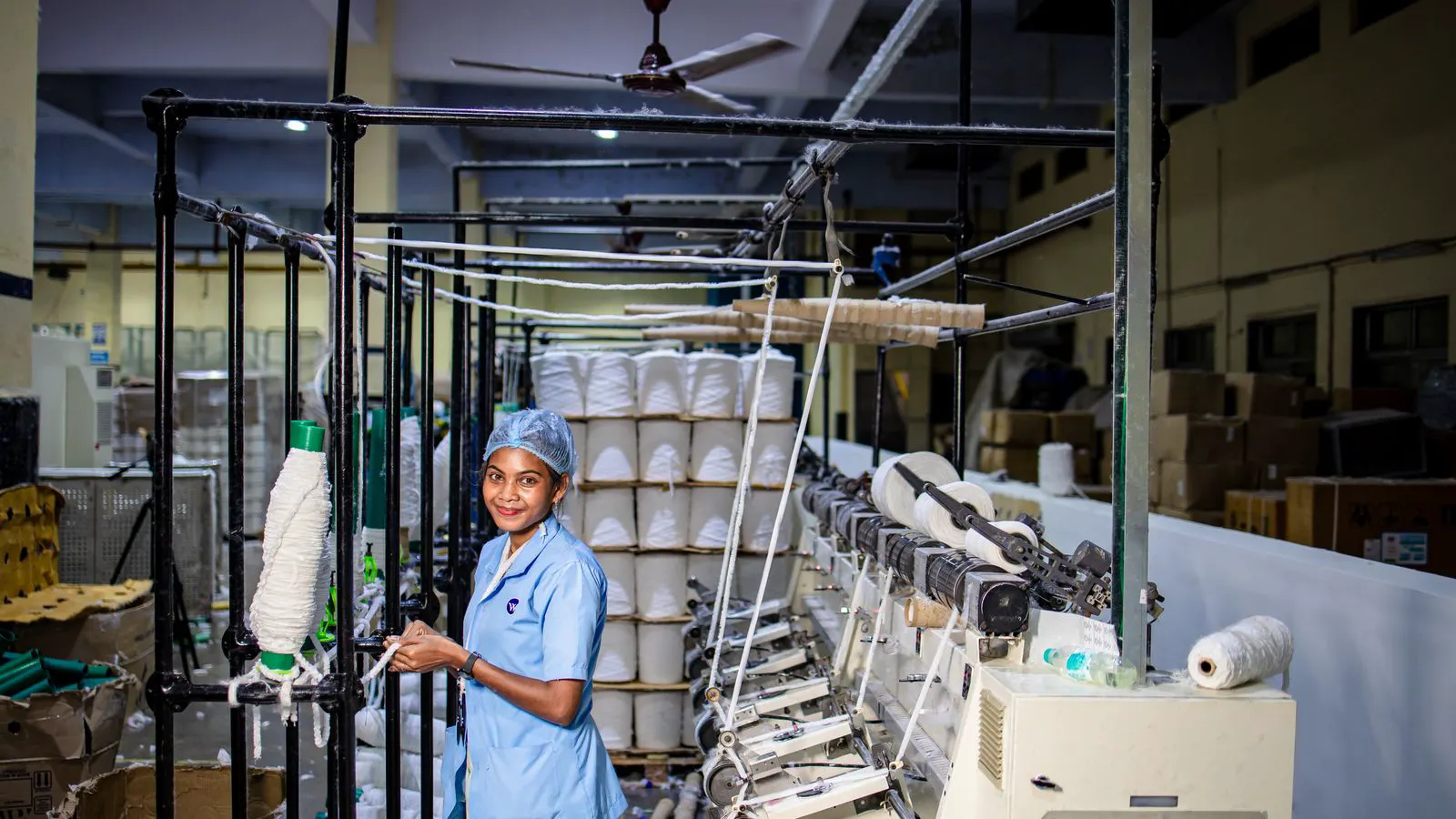
Spinning mills start with raw fiber. Cotton bales, wool slubs, jute, or synthetic staple fiber go into the line. The fiber is cleaned, carded, drawn, and twisted into continuous yarn. The output is a hank or cone of yarn.
Weaving mills start with yarn. The mill takes spun yarn, warps it onto a loom, and interlaces warp and weft threads to make fabric. The output is a bolt of woven cloth.
The distinction matters because each stage has different equipment, labor needs, and failure points. A spinning mill cannot deliver woven fabric. A weaving mill cannot deliver spun yarn unless it spins in-house. When you write a purchase order, name the exact stage you need.
Spinning Mill Process and What It Controls
A typical spinning line includes bale opening, cleaning, combing or drawing, and twisting. The cleaning step removes dirt, seeds, and short fibers. The twisting step sets the yarn strength and twist direction.
The output quality depends on fiber consistency. If the raw cotton has too many short fibers, the yarn will have weak points. If the twist is too low, the yarn will feel soft but may break during weaving. If the twist is too high, the yarn will feel stiff and resist dye penetration.
Spinning mills control three variables that affect the final fabric. First is yarn count. This is the thickness of the yarn. Second is twist. This is how tightly the fibers are twisted. Third is evenness. This is how uniform the yarn diameter is along its length.
For buyers, spinning mills are best when you need a specific yarn specification. You may want a high-twist yarn for technical applications. You may want a low-twist yarn for soft consumer apparel. You may want a blended yarn that mixes cotton and polyester. The mill must control the raw fiber and the machine settings to hit that target.
Spinning mills also handle inventory differently. They hold raw fiber in bales or bags. They produce yarn in hanks or cones. They ship by pallet or container. The lead time is driven by fiber availability and machine speed.
Weaving Mill Process and What It Controls
A weaving mill controls how yarn becomes cloth. The process starts with warping. Long lengths of warp yarn are measured and wound onto a warping machine. They are then transferred to a beaming machine and attached to a loom. The weft yarn is fed from a shuttle or air jet.
The loom interlaces the warp and weft. The speed of the loom depends on the fabric type. Plain weave moves quickly. Twill and satin are slower. The warp setup must be precise. If the warp tension is uneven, the fabric will have waves or slubs. If the weft is misfed, the fabric will have holes or breaks.
The output quality depends on yarn consistency, loom calibration, and operator attention. A small defect in the yarn can become a visible flaw in the fabric. A small error in the warp can ruin a bolt.
Weaving mills control three variables that affect the final fabric. First is fabric width. Second is thread count. This is the number of warp and weft threads per inch. Third is pattern complexity. A plain weave is simple. A twill or jacquard pattern requires more setup time and slower running.
Weaving mills also handle inventory differently. They hold yarn in hanks or cones. They produce fabric in bolts. They ship by roll or container. The lead time is driven by warp setup, loom speed, and quality checks.
Spinning vs Weaving Comparison Table
The table below compares the two main mill processes. Use it to sort your requirements before contacting suppliers.
| Option | Best for | Limitations |
|---|---|---|
| Spinning mill | Raw fiber to yarn conversion, custom yarn specs, blended yarns | Cannot deliver finished fabric, requires yarn buyer to source weaving |
| Weaving mill | Yarn to fabric conversion, specific fabric width and thread count | Requires purchased yarn, limited to woven structures, no fiber control |
| Integrated spinning and weaving mill | One-stop sourcing, traceability, shorter lead times | Higher entry cost, less flexibility in fiber sourcing, complex coordination |
| Knitting mill | Stretch fabrics, jersey, interlock, apparel blanks | Not a woven process, different quality checks, different machine setup |
| Nonwoven mill | Filters, hygiene products, technical textiles | Different fiber bonding method, no spinning or weaving, limited fabric types |
The table shows why the “right” mill depends on where your product sits in the chain. If you make a denim jacket, you need spun cotton yarn and woven fabric. If you make a t-shirt, you need spun cotton or blended yarn and knitted fabric. If you make a filter, you may need a nonwoven mill.
When to Choose a Spinning Mill
A spinning mill is the right choice when you need to control yarn properties directly. You may want a specific twist direction. You may want a specific fiber blend. You may want a low-impurity yarn for a light-colored fabric.
If you are sourcing for a high-end apparel brand, you may want to specify the fiber type. Organic cotton, long-staple cotton, and recycled polyester all require different cleaning and twisting steps. A spinning mill can set those parameters.
If you are sourcing for a technical product, you may want a specific yarn strength. A high-twist yarn resists abrasion better. A low-twist yarn feels softer. The spinning mill controls the twist. You cannot change it at the weaving stage without re-spinning.
If you are buying from multiple weaving mills, a single spinning mill can supply all of them with consistent yarn. This simplifies quality control. You test the yarn once. Each weaving mill then works with the same input.
A spinning mill is also useful when you want to build a long-term relationship with a fiber supplier. You can specify the bale quality, the cleaning standard, and the twist target. The mill becomes your fiber partner, not just a processing step.
When to Choose a Weaving Mill
A weaving mill is the right choice when you already have a yarn specification or when you want the mill to source yarn for you. Many weaving mills buy yarn from their own spinning lines or from third-party spinning mills. They have a standard set of yarns they can source quickly.
If you are sourcing for a standard fabric like poplin, twill, or satin, a weaving mill is often the most practical choice. You define the width, thread count, and finish. The mill handles the rest.
If you are buying in small quantities, a weaving mill may be faster than a spinning mill. Spinning mills often have minimum orders based on raw fiber volume. Weaving mills can run shorter production runs because they do not need to process bales.
If you need a specific fabric width, a weaving mill is the stage where that is set. The loom width is fixed by the machine. A standard loom may produce a 120-inch fabric. A wider loom may produce a 150-inch fabric. The weaving mill must have the right loom to produce your target width.
A weaving mill is also useful when you want to combine multiple yarns. You may want a warp yarn and a weft yarn that are different. A weaving mill can handle that. A spinning mill cannot.
When to Choose an Integrated Mill
An integrated mill spins and weaves on the same site. This is common in large textile clusters. The mill buys raw fiber, spins it into yarn, and weaves it into fabric.
The advantage is traceability. If a fabric batch fails, the mill can trace the problem back to the spinning step. If the fiber was bad, the spinning step will show it. If the yarn was fine, the weaving step will show it.
The advantage is lead time. Yarn moves from the spinning line to the weaving line by conveyor or internal transport. There is no shipping, no customs, no external supplier delay.
The limitation is flexibility. If you want a fiber that the mill does not stock, it must source it. That may add cost and time. If you want a yarn spec that the mill does not regularly produce, it may need to re-tune the spinning line. That also adds cost.
Integrated mills are best when you have a stable product line and want a single point of contact. They are less ideal when you need frequent changes in fiber type or yarn spec.
How to Decide for Your Project
Start with the fabric you need. Write down the structure, width, thread count, and finish. Then ask whether you need to control the yarn or the cloth.
If you need to control the yarn, source from a spinning mill or an integrated mill. If you need to control the cloth, source from a weaving mill or an integrated mill.
Check the minimum order quantity. Spinning mills often have higher MOQs because they buy fiber in bales. Weaving mills often have lower MOQs because they can run shorter loom runs.
Check the lead time. A spinning mill may take longer to start a new yarn spec. A weaving mill may take longer to set up a new width. An integrated mill may take less time if the yarn and fabric are standard.
Check the quality controls. A spinning mill should test yarn strength, twist, and evenness. A weaving mill should test fabric weight, thread count, and defect rate. Ask for the test reports. Ask for the inspection points.
Check the documentation. A spinning mill should provide fiber origin and cleaning records. A weaving mill should provide yarn source and warp setup records. An integrated mill should provide both.
Common Mistakes in Mill Selection
Buyers often ask for a “textile mill” without specifying the stage. The supplier may quote a spinning price or a weaving price. The quote may not match what you need.
Buyers often assume a weaving mill can change the yarn. It cannot. The yarn must be re-spun to change twist or fiber blend.
Buyers often assume a spinning mill can change the fabric width. It cannot. The width is a weaving parameter.
Buyers often ignore the finishing stage. A fabric may come from a weaving mill and still need washing, dyeing, or mercerizing. Those steps add cost and time.
Buyers often skip the sample round. A spinning mill can produce a yarn sample. A weaving mill can produce a fabric sample. Do both. Do not rely on a single sample.
Final Selection Checklist
Use this checklist before you send an RFQ.
- Define the fabric structure and width.
- Define the yarn spec or ask the mill to recommend one.
- State whether you need spun yarn, woven fabric, or both.
- State the minimum order quantity.
- State the target lead time.
- State the quality controls and inspection points.
- Ask for a sample yarn and a sample fabric.
- Ask for the mill process flow.
- Ask for the fiber source and origin.
- Ask for the documentation package.
The right mill is the one that matches your product stage and your quality needs. A spinning mill builds yarn. A weaving mill builds cloth. An integrated mill builds both. Name the stage in your request. The supplier will answer faster and more accurately.
Frequently asked questions
Can a weaving mill also spin yarn?
Some weaving mills have in-house spinning lines. Others buy yarn from external spinning mills. Ask the supplier whether they spin in-house or outsource.
What is the main difference in cost between spinning and weaving?
Spinning cost is driven by raw fiber and machine speed. Weaving cost is driven by loom speed, width, and pattern complexity. The total fabric cost includes both stages plus finishing.
Which mill process is faster for small orders?
Weaving mills often handle small orders faster because they do not need to process raw fiber. Spinning mills often have higher minimums because they buy fiber in bales.
Do I need both a spinning mill and a weaving mill?
Not always. An integrated mill can handle both stages. If you source from two separate mills, you need to manage the yarn handoff and quality checks between them.
How do I verify the fiber source at a spinning mill?
Ask for fiber origin documentation and cleaning records. Request a yarn sample and test it for strength, twist, and evenness. A reputable mill will provide these documents.